
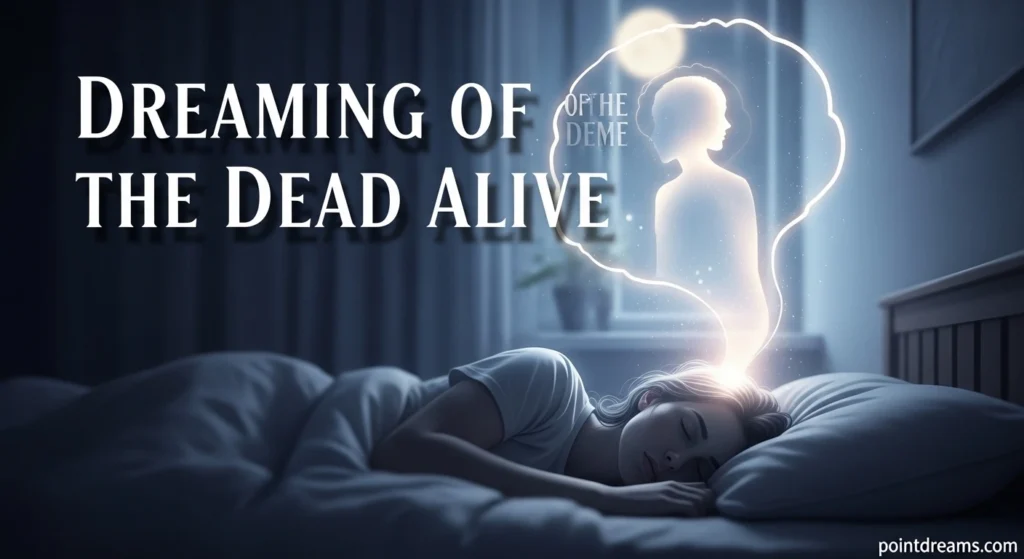
It is one of those dreams that lingers long after you wake. Someone who has passed away appears before you—not as a memory, but alive, present, and unmistakably real. They may be speaking, smiling, walking beside you, or simply looking at you with a familiarity that unsettles and comforts at the same time. For a few seconds in the dream, the loss feels undone. Then morning arrives, and you are left with a strange emotional aftertaste: grief, relief, guilt, longing, or all of them at once.
Dreams of the dead appearing alive are never emotionally neutral. They often arrive during periods of transition, pressure, or inner reflection, when the mind is trying to process feelings that have not yet found their full voice. Astrology offers a meaningful way to understand these dreams because it treats them not as random images, but as emotional signals shaped by lunar rhythms, Neptune’s dreamlike influence, Pluto’s depth, and the symbolic language of memory itself.
Whether the dream feels like comfort or a wound reopening, it usually points to something important moving beneath the surface. Understanding that movement can help turn confusion into clarity, and emotional shock into insight.
The emotional meaning behind the dead appearing alive
When someone who has died appears alive in a dream, the first instinct is often to search for a literal explanation. Yet emotionally, these dreams are usually about continuity rather than contradiction. The person is gone in waking life, but their presence remains active in memory, habit, values, and feeling. The dream allows that presence to return in a form the subconscious can work with.
The dead person may symbolize unfinished emotional business, but they may also represent a part of your own emotional life that has not fully settled. You may not be dreaming of the person alone; you may be dreaming of the relationship, the season of life, or the version of yourself that existed around them.
Why the dream feels so real
Dreams do not rely on logic. They rely on emotional truth. A person can appear alive in a dream because the emotional connection is still alive internally, even if the physical relationship has ended.
What the mind is trying to do
The subconscious may be revisiting a memory to integrate grief, soften guilt, or restore emotional balance.
These dreams are not usually about denying death. They are about the mind making room for what remains after death: meaning, love, regret, and memory.
Astrology and the language of the subconscious

Astrology approaches dreams as expressions of inner weather. The planets do not control your dream in a mechanical sense, but they offer symbolic patterns that can help explain why certain emotional themes surface at certain times.
The Moon is often the most important body in dream interpretation. It governs memory, instinct, and emotional tides. When the Moon is emphasized in a chart or transit, dreams tend to become more vivid, more personal, and more likely to revisit old attachments.
Neptune adds another layer. It governs dreams, boundaries, intuition, illusion, and spiritual sensitivity. Under Neptune’s influence, the line between memory and imagination blurs, making dream figures feel startlingly alive.
Pluto brings depth, endings, rebirth, and psychological excavation. When Pluto is active, buried emotions often rise to the surface in symbolic form. A deceased loved one appearing alive may be a Pluto-style message: something old is returning so it can be transformed.
Astrology does not replace emotional insight; it enriches it. It suggests that a dream is often part of a larger cycle of feeling, memory, and change. The dead may appear alive when the psyche is moving through an emotional season that asks for deeper honesty. In that sense, the dream is not strange at all. It is timely.
Why grief often returns in symbolic form
Grief does not end simply because time passes. It changes shape. Sometimes it is obvious, appearing as sadness or tears. Other times it hides inside dreams, where the mind can revisit the loss in a safer symbolic environment.
Dreaming of the dead alive often happens when grief has not fully integrated. This does not mean you are stuck or broken. It means your emotional system is still working through the relationship. The dream is part of that process, not evidence of failure.
Grief as unfinished language
Some losses are too large for waking language. The dream gives them a voice.
Grief as return
The dead may appear alive because your emotional memory is trying to keep the bond intact while accepting its physical ending.
Grief as reactivation
Anniversaries, stress, change, or loneliness can reactivate grief without warning. The dream becomes the place where the feeling can safely reappear.
In astrology, this is where lunar symbolism matters most. The Moon reflects cycles, and grief itself is cyclical. It returns, recedes, and returns again. A dream of the dead alive may simply mean your emotional tides have shifted enough for old love or old sorrow to surface again.
The role of guilt and unresolved emotion
Not all dreams of the dead alive are comforting. Some are heavy with guilt, regret, or unfinished emotional conversations. In astrological and psychological terms, these dreams often appear when the inner self is trying to process accountability.
Maybe there was something you did not say. Maybe the relationship ended with tension. Maybe you feel you should have visited more, listened better, or forgiven earlier. The dream may bring the person back to give your mind a space to revisit those feelings.
Guilt without obvious wrongdoing
Sometimes guilt is not about a single mistake. It is about the emotional belief that you could have done more.
Regret as dream fuel
Regret often creates emotionally vivid dreams because the mind keeps returning to “what might have been.”
The dead as a mirror of self-judgment
The figure may not be condemning you. It may reflect the way you condemn yourself.
Pluto often governs these deep emotional reckonings. It does not let hidden feelings stay hidden forever. When guilt appears in dream form, it is usually asking for compassion, not punishment. The dream is less about accusing you and more about showing that your inner emotional ledger is still open.
When the dream feels comforting instead of painful
Many people are surprised when dreaming of the dead alive feels peaceful, even warm. In those dreams, the person may be healthy, smiling, speaking gently, or simply present in a calm and reassuring way. Rather than triggering distress, the dream can leave you with a sense of being protected or visited.
This emotional tone matters enormously. It suggests that the dream is functioning as comfort rather than conflict. The psyche may be giving you a temporary return to safety, a reminder of love that still exists in memory and influence.
Comfort as emotional restoration
Sometimes the dream arrives when life feels heavy, and the mind offers a familiar presence to steady you.
Love that persists
The dream may reflect the emotional truth that your bond with the person did not vanish—it changed form.
Inner soothing through symbol
Your subconscious may be creating a comforting image because you need reassurance that you can still feel held, even in loss.
Astrologically, this kind of dream is often associated with gentle Moon or Neptune energy, especially when the emotional field is tender, reflective, or vulnerable. The dream becomes a soft landing place, not a warning. It says, in effect, that love can continue to live in a different way.
Signs in the dream and what they may suggest
The dead person speaks clearly
This may point to unresolved emotional communication or a direct message from your subconscious. The words often matter less than the feeling behind them.
The dead person is silent
Silence can indicate acceptance, distance, or the difficulty of articulating grief. It may also reflect a moment when words are no longer needed.
The dead person looks younger or healthier
This often suggests memory idealization. The mind preserves the version of the person linked to emotional safety or a formative period in your life.
The dead person disappears again
This may symbolize a brief emotional reopening followed by re-acceptance of the loss. It is common in cyclical grief.
You feel frightened in the dream
Fear can indicate unresolved tension, hidden guilt, or emotional overload. The dream may be surfacing something you have not yet faced.
Each detail shifts the meaning. Astrology encourages you to read the emotional atmosphere first, then the symbols. The atmosphere usually reveals whether the dream is about comfort, grief, guilt, or transformation.
Planetary influences that often heighten these dreams

Some dreams feel more vivid during certain astrological conditions. These moments do not “cause” the dream in a simplistic way, but they often correlate with stronger emotional sensitivity and symbolic processing.
The Moon is the most obvious influence. Because it governs moods, memory, and instinct, heightened lunar energy can make dreams more personal and emotionally immersive. A full moon, in particular, often coincides with emotional release and heightened dream recall.
Neptune’s influence is more subtle but powerful. It dissolves boundaries between waking and dreaming, reality and memory. Under Neptune-heavy periods, the dead may seem especially real, almost physically present.
Pluto brings the deepest dreams of all. It can surface buried grief, unresolved attachment, and emotional transformation. Dreams of the dead alive may arise during Pluto transits or periods when your life is asking for deep emotional honesty.
Mercury also matters when memory and communication are central. When Mercury is active in retrograde or heightened cycles, people often revisit old conversations, names, places, and emotional patterns. A deceased loved one may appear alive because your mind is revisiting unfinished communication in a symbolic way.
Astrology here is not about prediction. It is about emotional timing. It helps explain why some periods of life make these dreams more frequent, more vivid, and more emotionally loaded than others.
Real-life situations that often trigger this dream
Dreams of the dead alive rarely come from nowhere. They often arise during emotionally charged moments in waking life. A loss anniversary may be approaching. A major change may be underway. You may be feeling lonely, pressured, reflective, or unexpectedly nostalgic.
A new beginning
Marriage, a move, a job change, or a birth can stir up old emotional bonds. The mind may summon a dead loved one during the transition, as if asking for guidance or continuity.
A difficult decision
When you need clarity, the subconscious may bring back a person whose wisdom or authority still matters to you.
Loneliness or emotional depletion
If you feel unsupported, the dream may return you to a figure associated with comfort, strength, or belonging.
An emotional threshold
Sometimes the dream appears when you are no longer who you were, but not yet fully who you are becoming.
Astrologically, these moments often align with lunar shifts, Pluto transitions, or Neptune-heavy emotional periods. The dream is not random. It often emerges when the emotional system is under enough pressure to reach for symbolic memory.
How the dead can reflect parts of yourself
One of the most important insights in dream interpretation is that dream figures often represent more than themselves. A deceased loved one, especially a parent or close relative, may embody qualities, fears, values, or unfinished inner conversations within you.
The person may stand for your conscience, your longing for approval, your fear of repeating old mistakes, or your wish to reconnect with a lost part of your own identity. When they appear alive, it can mean that something within you is becoming emotionally active again.
The dead as inner guidance
You may be revisiting a trait they carried—strength, patience, caution, tenderness, or discipline.
The dead as unresolved identity
The dream may reflect the version of you that existed when they were alive, and the emotions tied to that version.
The dead as emotional inheritance
What they gave you, challenged you with, or left behind may still be shaping how you move through the world.
In astrology, this aligns with the idea that dreams often reveal hidden internal structures. The dead in dreams may be less about loss and more about inheritance—what remains living inside your emotional architecture.
How to respond when this dream stays with you
If a dream of the dead alive stays with you after waking, it helps to approach it gently. The first step is to notice the feeling rather than the story. Did the dream leave you calm, sad, guilty, frightened, or strangely reassured? That emotional residue is often the most important part.
Write down what happened in the dream, but do not force one meaning too quickly. The point is not to decode the dream like a puzzle; it is to listen to what your emotional system is trying to say.
Ask what surfaced
Was it guilt, comfort, longing, or unfinished business?
Notice timing
Did the dream appear during a period of stress, change, or emotional reflection?
Look for patterns
If the dream repeats, note whether the tone changes over time. That often reveals healing progress.
Allow complexity
A dream can be sad and comforting, mysterious and clear, personal and symbolic all at once.
Astrology encourages this kind of layered reflection. The dream may not require an answer. It may only require acknowledgment. Sometimes that is enough for the emotional message to begin settling into place.
Mistakes people often make when interpreting these dreams
One of the biggest mistakes is assuming that the dream must mean the dead person is literally reaching out. While some people find spiritual meaning in that idea, astrology usually emphasizes symbolic and emotional interpretation first. The dream is more often about your inner world than external proof.
Another mistake is assuming that dreaming of a dead loved one alive means you are not “over” their death. Grief does not work that way. Having such a dream is normal, especially during transitions or emotionally sensitive periods.
A third mistake is ignoring the details and focusing only on the fact that the person was alive. The tone, setting, and your emotional response matter just as much. A peaceful reunion carries a different message than a tense or frightening encounter.
Finally, some people dismiss these dreams as meaningless. But dreams like this are often among the most emotionally informative experiences the mind produces. They deserve attention, not fear. Astrology helps by showing that these dreams often arrive at meaningful emotional thresholds, when the inner self is ready to revisit what still matters.
Turning the dream into growth
The real value of this dream is not in certainty, but in insight. Whether it reflects guilt, comfort, grief, or unresolved memory, it points toward something emotionally alive in you. That is what makes it worth exploring.
If the dream was comforting, you may need reassurance or connection. If it was painful, you may need forgiveness or closure. If it felt neutral but intense, you may be at a threshold where a hidden emotional layer is ready to be recognized.
The astrologically informed approach is simple: treat the dream as a signal of timing. Your emotional life may be moving through a lunar cycle, a Neptune-like blur, or a Pluto-level transformation. The dead appearing alive may simply mean that the past is not demanding to control you; it is asking to be integrated.
Growth begins when you stop asking only “What does it mean?” and start asking, “What in me is being awakened right now?” That question turns the dream from a mystery into a mirror.
Conclusion
Dreaming of the dead alive can feel deeply personal because it touches the most tender parts of memory, grief, guilt, and love. Astrology offers a useful way to understand these dreams by showing how emotional cycles, lunar sensitivity, Neptune’s dreamlike influence, and Pluto’s depth all contribute to the symbolic language of the subconscious. These dreams are rarely random. They often appear when something inside you is shifting—when the past needs to be revisited so it can be processed, softened, and integrated.
Whether the dream felt comforting or unsettling, it likely revealed something important about your emotional state. The dead may appear alive because love remains alive in memory, because guilt still wants compassion, or because a part of you is ready to transform. The dream is not just about the person you saw. It is about the emotional truth that surfaced through them. And that truth, once acknowledged, can guide you toward greater clarity, peace, and inner balance.
FAQs
1. Does dreaming of the dead alive mean it is a spiritual visitation?
It can feel spiritual, but astrologically it is usually understood first as symbolic emotional processing rather than literal proof.
2. Why do these dreams feel so real?
Because emotional memory and dream imagery become especially vivid when lunar or Neptune-like sensitivity is active.
3. What does it mean if the dream feels comforting?
It often means your subconscious is offering reassurance, safety, or a sense of continued emotional connection.
4. Why do I dream of a dead loved one during stressful times?
Stress can reactivate memory and emotional bonds, causing the subconscious to bring back familiar figures for support or reflection.
5. Should I worry if these dreams repeat?
No. Repetition usually means the emotional theme is still being processed, not that something is wrong.
