
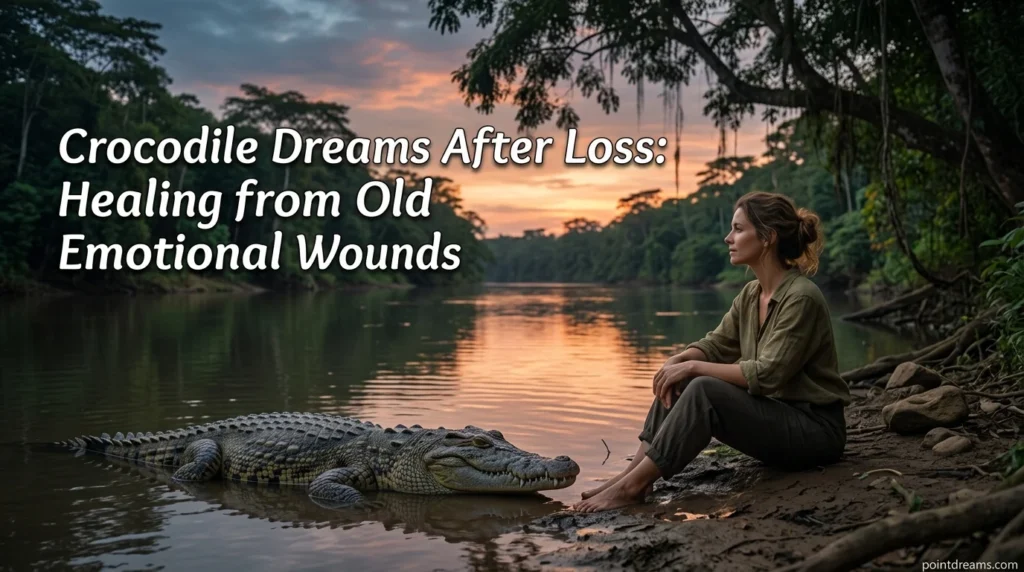
You’re walking along the edge of a still, murky river. The air feels heavy, almost too quiet. Suddenly, the surface ripples. A pair of eyes emerges—watching, waiting. Before you can react, a crocodile lunges forward, its power shocking, its presence ancient and unrelenting. You wake up with your heart racing, the feeling lingering long after the dream fades.
Dreams like these don’t come out of nowhere. They often surface during moments when something inside you is shifting—especially after loss. Whether it’s the end of a relationship, the passing of a loved one, or even the quiet grief of letting go of who you once were, crocodile dreams can feel deeply unsettling. But beneath that fear lies something important.
Crocodiles in dreams are powerful symbols—often tied to buried emotions, survival instincts, and old wounds that haven’t fully healed. Understanding these dreams can help you uncover hidden feelings, process lingering pain, and begin the slow but meaningful journey of emotional healing.
The Symbolism of Crocodiles in Dreams
Crocodiles are ancient creatures, often associated with primal instincts, survival, and hidden danger. In dreams, they rarely appear as random animals—they represent something deeper, something lurking beneath the surface of your awareness.
Water, where crocodiles usually reside, symbolizes emotions. When a crocodile appears in that water, it suggests that something within your emotional world is concealed, waiting to be acknowledged. It may not always be something obvious; often, it’s tied to feelings you’ve suppressed or avoided.
Crocodiles are also patient predators. They wait, still and silent, before striking. This mirrors emotional patterns where unresolved pain doesn’t disappear—it lingers quietly until something triggers it again.
In the context of loss, the crocodile becomes a symbol of old wounds resurfacing. It’s not just about what you’ve recently lost but also about past experiences that may still be affecting you. These dreams are less about danger and more about awareness—an invitation to look deeper into your emotional landscape.
Why Loss Awakens Old Emotional Wounds
Loss has a unique way of reopening doors we thought were long closed. It doesn’t just bring fresh grief—it can stir up memories, emotions, and unresolved experiences from the past.
When you lose something significant, your mind doesn’t process it in isolation. Instead, it connects the present pain to past wounds, creating a layered emotional response. This is why grief can sometimes feel overwhelming or disproportionate—it’s not just about now, but everything that came before.
Crocodile dreams often emerge during this process. The crocodile represents those older, buried emotions that have been stirred awake. It’s as if your mind is saying, “There’s more here than you realize.”
For example, losing a close friend might bring back feelings of abandonment from childhood. Ending a relationship could reopen insecurities you thought you had overcome. These connections aren’t always obvious, but they are deeply influential.
Understanding this link can help you approach your emotions with more compassion. Instead of asking, “Why does this hurt so much?” you begin to ask, “What else is this connected to?”
Read More: https://pointdreams.com/tsunami-dreams-meaning/
The Hidden Nature of Emotional Pain

One of the most striking aspects of crocodiles is their ability to remain hidden beneath the water’s surface. This makes them a powerful symbol for emotions that are not fully visible or acknowledged.
In daily life, it’s easy to push feelings aside. You might tell yourself you’re “fine” or distract yourself with routines and responsibilities. But emotions don’t disappear—they settle beneath the surface, much like a crocodile waiting in still water.
Subtle Signs in Dreams
- Calm water suddenly disturbed
- A crocodile appearing without warning
- A sense of unease before anything happens
These elements reflect how hidden emotions behave. They don’t always announce themselves clearly; instead, they build quietly until they demand attention.
Why We Hide Pain
Sometimes, we avoid emotions because they feel too overwhelming or uncomfortable. Other times, we’ve learned to suppress them as a way of coping.
Crocodile dreams gently challenge this pattern. They bring those hidden feelings into view, encouraging you to acknowledge and process them rather than keep them buried.
Fear, Vulnerability, and Emotional Defense
Crocodiles are often perceived as dangerous, and the fear they evoke in dreams is significant. But this fear is rarely about physical harm—it’s about emotional vulnerability.
After experiencing loss, it’s natural to become more guarded. You may fear being hurt again, leading you to build emotional defenses. The crocodile can symbolize this protective instinct—strong, alert, and ready to react.
However, these defenses can also create distance between you and your own feelings. The more you try to protect yourself, the harder it becomes to fully process what you’ve been through.
The Double-Edged Nature of Protection
- Protection keeps you safe from immediate pain
- But it can also prevent deeper healing
Crocodile dreams often highlight this tension. They ask you to consider whether your defenses are helping you heal or holding you back.
Recognizing this balance is an important step toward emotional growth, allowing you to stay safe while still remaining open to healing.
Different Crocodile Dream Scenarios and Their Meanings
Being Chased by a Crocodile
This often reflects avoidance. There may be emotions or memories you’re trying to escape, but they continue to follow you.
Fighting a Crocodile
This suggests confrontation. You may be actively dealing with difficult emotions or trying to regain control over a situation.
Seeing a Calm Crocodile
A calm crocodile may represent awareness. You recognize the presence of deeper emotions, even if they are not currently overwhelming.
Being Attacked
An attack can symbolize sudden emotional overwhelm—perhaps triggered by a memory or situation that caught you off guard.
Each scenario offers insight into how you’re interacting with your emotions, whether you’re avoiding them, confronting them, or beginning to understand them.
The Role of Trust After Loss

Loss can significantly impact your ability to trust—not just others, but also yourself. You may question your judgment, your decisions, or your sense of safety.
Crocodile dreams can reflect this uncertainty. The unpredictability of the animal mirrors the unpredictability you may feel in your life.
After being hurt, it’s common to become cautious. You might second-guess relationships or hesitate to open up. While this caution is understandable, it can also limit your ability to move forward.
These dreams encourage you to rebuild trust gradually. It doesn’t have to happen all at once. Small steps—like sharing your thoughts with someone you trust or allowing yourself to feel vulnerable—can make a big difference.
Rebuilding trust is not about ignoring past pain but about learning from it and moving forward with greater awareness.
Emotional Triggers and Memory Connections
Crocodile dreams are often linked to emotional triggers—moments in your waking life that activate deeper feelings.
A song, a place, a conversation—these seemingly small experiences can bring back powerful emotions tied to past events. The crocodile represents these hidden connections, reminding you that your emotional world is interconnected.
Recognizing Triggers
Pay attention to what’s happening in your life when these dreams occur. Is there something reminding you of the past? Are you facing a situation that feels familiar?
Understanding the Response
Your reaction to a trigger may seem intense, but it often has roots in earlier experiences. The dream helps you see this connection more clearly.
By identifying triggers, you can begin to respond to them more consciously, rather than being overwhelmed by them.
Healing Through Awareness
Awareness is the first step toward healing. Crocodile dreams bring attention to what you might otherwise ignore, giving you a chance to understand your emotions more deeply.
Instead of dismissing the dream as random or frightening, you can use it as a tool for reflection. What did you feel? What stood out? What might it represent?
This process doesn’t require immediate answers. Sometimes, simply sitting with the questions is enough to start the healing journey.
Over time, this awareness can lead to greater emotional clarity. You begin to understand not just what you feel, but why you feel it.
Healing is not about eliminating pain—it’s about integrating it into your life in a way that allows you to move forward.
Letting Go of the Past Without Forgetting
One of the challenges of healing is finding a way to let go without feeling like you’re losing something important. Memories, even painful ones, are part of who you are.
Crocodile dreams can symbolize the grip of the past—how it holds on, sometimes tightly. Letting go doesn’t mean erasing these experiences; it means changing your relationship with them.
Shifting Perspective
Instead of seeing the past as something that controls you, you begin to see it as something that shaped you.
Creating Space
Letting go creates room for new experiences, relationships, and growth.
This process takes time and patience. It’s not about forcing yourself to move on but about gradually finding peace with what has been.
Practical Steps for Emotional Healing
Journaling Your Dreams
Writing down your dreams can help you identify patterns and gain insight into your emotions.
Practicing Mindfulness
Being present with your feelings, without judgment, can reduce their intensity.
Seeking Support
Talking to a trusted friend or professional can provide perspective and comfort.
Setting Boundaries
Protecting your emotional space is essential, especially when you’re healing.
These steps may seem simple, but they can have a profound impact when practiced consistently.
Common Misunderstandings About Crocodile Dreams

It’s easy to assume that crocodile dreams are purely negative or symbolic of danger. While they can feel intense, they are not necessarily bad.
Another misconception is that these dreams indicate something external—like a threat from others. In most cases, they reflect internal emotional processes.
Some people also believe that having such dreams means they’re not coping well. In reality, these dreams often indicate the opposite—that your mind is actively working through complex emotions.
Understanding these misconceptions can help you approach your dreams with curiosity rather than fear.
Building Emotional Strength and Resilience
Healing from loss and old wounds requires resilience—the ability to face difficult emotions and continue moving forward.
Crocodile dreams, in their intensity, can actually contribute to this process. They challenge you to confront what’s hidden, building emotional strength over time.
Resilience doesn’t mean being unaffected by pain. It means learning how to navigate it, adapt to it, and grow from it.
As you become more aware of your emotions and more comfortable with vulnerability, you may find that these dreams change. They may become less frightening or take on new meanings.
This shift reflects your own growth—a sign that you are healing, even if the journey is still ongoing.
When to Seek Deeper Support
While many crocodile dreams are part of natural emotional processing, there are times when additional support may be helpful.
If the dreams are recurring, highly distressing, or accompanied by persistent emotional struggles, it may be worth exploring them more deeply with a professional.
Seeking help is not a sign of weakness—it’s a step toward understanding yourself more fully.
Sometimes, having someone guide you through your emotions can make the process less overwhelming and more manageable.
Turning Dreams Into Personal Growth
Crocodile dreams, like many intense dream experiences, offer an opportunity for growth. They bring hidden emotions to the surface, allowing you to engage with them consciously.
Instead of fearing these dreams, you can see them as messages—signals from your mind that something important needs attention.
By reflecting on their meaning, applying what you learn, and taking steps toward healing, you transform the dream into a tool for personal development.
Growth doesn’t happen overnight, but each step you take brings you closer to a deeper understanding of yourself and your emotional world.
Conclusion
Crocodile dreams after loss can feel intense, even unsettling, but they carry meaningful insights about your emotional world. They often symbolize hidden pain, old wounds, and the complex layers of grief that resurface during times of change. Rather than viewing these dreams as something to fear, they can be understood as a natural part of the healing process—an invitation to explore, acknowledge, and work through what lies beneath the surface.
By paying attention to their symbolism, recognizing emotional triggers, and taking practical steps toward healing, you can gradually transform these experiences into opportunities for growth. In doing so, you not only process past pain but also build resilience, clarity, and a deeper connection with yourself.
FAQs
1. What does it mean to dream about crocodiles after a loss?
It often symbolizes hidden emotions or unresolved pain resurfacing as part of the healing process.
2. Are crocodile dreams always negative?
No, they can represent awareness, emotional processing, and even growth.
3. Why do these dreams feel so real and intense?
Because they are connected to deep emotions and primal instincts, making them more vivid.
4. Can these dreams stop on their own?
Yes, as you process your emotions and heal, they may become less frequent.
5. Should I be worried about recurring crocodile dreams?
Not necessarily, but if they cause distress, exploring them further or seeking support can be helpful.
