

You wake up suddenly, heart slightly racing, confused about what just happened in your mind. The dream was vivid—emotionally intense, oddly realistic, and somehow still lingering in your thoughts long after you’ve opened your eyes. It wasn’t just once. It’s happening again. And again. You start to wonder: Why do I keep having these dreams? Is something wrong with me, or is my mind trying to tell me something deeper?
Recurring sex dreams can feel confusing, awkward, or even embarrassing to think about. But psychologically, they are far more common—and far more meaningful—than people assume. These dreams are not just about physical desire. They often reflect emotional needs, unresolved thoughts, stress patterns, identity exploration, and subconscious processing of relationships and intimacy.
In reality, the mind uses sexual imagery as a symbolic language for connection, energy, vulnerability, and emotional expression—not just literal attraction. When these dreams repeat, it usually means your subconscious is highlighting something important that hasn’t been fully processed in waking life.
This article explores five key psychological triggers behind recurring sex dreams and what they may reveal about your emotional world, inner conflicts, and personal growth.
Unresolved Emotional Desire for Connection
One of the most common psychological triggers behind recurring sex dreams is unmet emotional connection—not necessarily physical desire.
What This Really Means
Humans are wired for emotional bonding. When emotional needs are not fully met in waking life, the subconscious often expresses this through intimacy-based dreams.
Emotional Signals Behind the Dream
- Feeling emotionally lonely
- Lack of deep communication
- Desire for closeness or understanding
Mini Story
Imagine someone who is surrounded by people but feels emotionally disconnected. They may repeatedly dream of intimate scenarios—not because of physical desire alone, but because their mind is craving emotional closeness.
Key Insight
Sex in dreams often symbolizes connection, not just attraction.
If ignored, this emotional gap may continue to surface in recurring dreams until acknowledged in waking life.
Stress and Psychological Pressure Release

Recurring sex dreams can also appear when your mind is under pressure and looking for emotional release.
Why Stress Triggers These Dreams
Stress builds tension in the nervous system. During sleep, the brain seeks ways to discharge that emotional load.
How It Manifests in Dreams
- Intense emotional scenarios
- Heightened sensations
- Repetitive dream patterns
Example Scenario
A person working long hours under constant pressure may experience recurring vivid dreams as a form of mental release. The sexual imagery is not the focus—it’s the emotional intensity behind it.
Psychological Meaning
These dreams function like pressure valves for the mind.
Reflection
Ask yourself: Where in my life am I feeling overwhelmed or overstimulated?
Understanding this can reduce recurrence over time.
Repressed Emotions and Unexpressed Needs
Another major trigger is emotional suppression.
What Suppression Looks Like
- Avoiding emotional conversations
- Ignoring personal needs
- Suppressing vulnerability
When emotions are not expressed consciously, they often appear symbolically in dreams.
Why Sexual Dreams?
Because intimacy represents vulnerability, openness, and emotional exposure.
Mini Story
Someone who avoids emotional intimacy in relationships may still experience recurring dreams of closeness or physical connection. Their subconscious is expressing what they are not saying aloud.
Key Insight
These dreams are not about behavior—they are about emotional expression.
Ignoring them may keep emotional needs hidden, but not resolved.
Exploration of Identity and Self-Expression
Recurring sex dreams can also reflect identity exploration, especially during periods of personal change.
Psychological Meaning
Sexual imagery can symbolize integration of different aspects of self—confidence, vulnerability, assertiveness, or creativity.
Examples of Identity Exploration
- New relationships
- Career transitions
- Personal growth phases
- Changes in self-image
Mini Story
Someone entering a new phase of independence may have recurring intimate dreams that feel unfamiliar. These dreams can represent emerging confidence or self-discovery.
Key Insight
The dream is not always about another person—it may be about you becoming someone new.
Curiosity, Fantasy Processing, and Mental Simulation

The brain naturally processes curiosity and imagination during sleep.
Why This Happens
Your subconscious organizes thoughts, fantasies, and emotional impressions during rest.
What It Means
Recurring sex dreams may simply reflect:
- Mental curiosity
- Exposure to romantic or emotional content
- Natural imaginative processing
Example Scenario
Someone thinking frequently about relationships—even without emotional stress—may experience recurring dreams as their mind explores possibilities.
Key Insight
Not every recurring dream has deep emotional conflict. Sometimes, it is the brain exploring scenarios safely.
Emotional Attachment to a Specific Person
Sometimes recurring sex dreams involve the same person repeatedly.
What This Can Indicate
- Emotional attachment
- Unresolved feelings
- Symbolic representation of qualities
Important Insight
The person in the dream may not represent themselves directly—they may symbolize traits or emotional experiences.
Example
Dreaming repeatedly about a confident person may reflect your subconscious desire for confidence, not necessarily attraction to that individual.
Reflection
Ask: What does this person represent to me emotionally?
The Role of Loneliness in Dream Patterns
Loneliness is a powerful emotional trigger for recurring intimacy-related dreams.
Emotional Characteristics of Loneliness
- Feeling unseen or unheard
- Lack of emotional support
- Desire for closeness
Dream Expression
The mind may create vivid connection scenarios to compensate for emotional absence.
Mini Story
Someone living independently for the first time may experience recurring dreams of closeness and intimacy as their mind adjusts to emotional solitude.
Key Insight
These dreams are emotional responses—not judgments.
Hormonal and Biological Influences
While psychological factors are primary, biology also plays a role.
What Influences Dreams
- Hormonal fluctuations
- Sleep cycles
- Physical arousal during REM sleep
Important Understanding
These biological factors do not fully determine meaning—but they can influence frequency and intensity.
Insight
The body and mind work together during dreaming, making experiences more vivid.
Recurring Patterns: Why the Mind Repeats Dreams
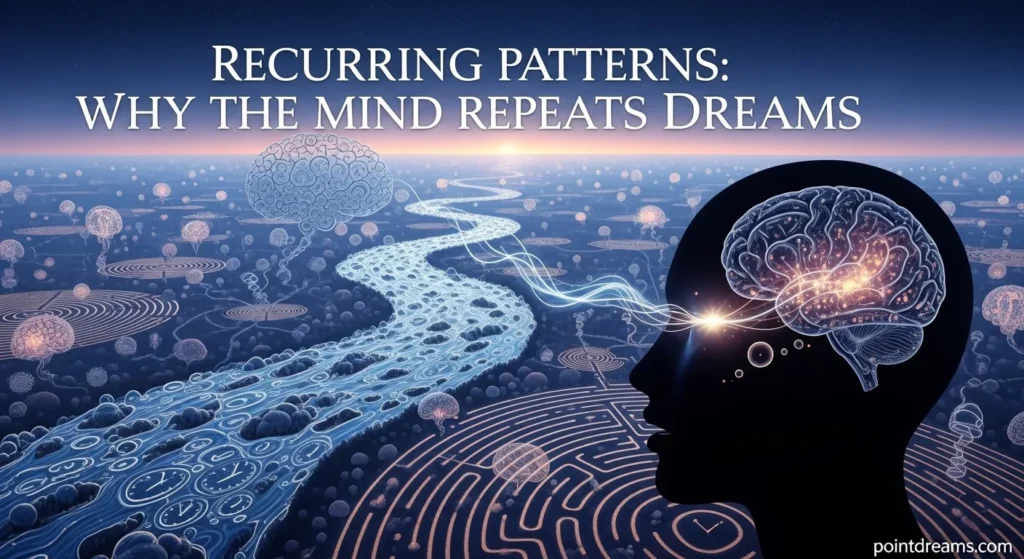
When dreams repeat, it signals unresolved emotional material.
Why Repetition Happens
- Unprocessed emotions
- Strong psychological themes
- Ongoing life situations
Pattern Recognition
Recurring dreams often share:
- Similar settings
- Similar emotional tone
- Similar feelings afterward
Key Insight
Repetition is emphasis—not randomness.
The subconscious repeats what it considers important.
Emotional Symbolism vs Literal Interpretation
One of the biggest misunderstandings about sex dreams is taking them literally.
What They Often Symbolize
- Emotional intimacy
- Trust
- Vulnerability
- Integration of personality traits
Example
A dream involving intimacy with a stranger may symbolize openness to new experiences, not literal desire.
Key Insight
Dreams communicate emotionally, not literally.
Anxiety About Relationships or Expectations
Sometimes recurring sex dreams reflect anxiety rather than desire.
What This Looks Like
- Confusion about relationships
- Fear of intimacy
- Pressure from social expectations
Example Scenario
Someone unsure about commitment may experience emotionally charged dreams reflecting internal conflict.
Reflection
The dream is highlighting emotional uncertainty—not predicting outcomes.
How Emotional Processing Happens During Sleep
Sleep is when the brain organizes emotional experiences.
What Happens in REM Sleep
- Memory processing
- Emotional regulation
- Symbolic storytelling
Why Intimacy Appears
Because it is one of the strongest emotional experiences the brain can simulate.
Key Insight
Dreams are emotional processing systems, not random stories.
Practical Ways to Understand and Reduce Recurring Dreams
Helpful Steps
- Reflect on emotional needs
- Reduce stress before sleep
- Journal recurring patterns
- Improve emotional expression
Reflection Questions
- What emotion repeats in my dreams?
- What am I avoiding in waking life?
Key Idea
Understanding reduces intensity over time.
Conclusion
Recurring sex dreams are not simply about physical desire—they are complex psychological messages shaped by emotion, stress, identity, and subconscious processing. Whether they reflect emotional connection, unmet needs, stress release, or personal transformation, these dreams are deeply connected to your inner world.
Rather than feeling confused or uncomfortable, it is more helpful to see them as signals. They highlight areas of emotional importance—loneliness, curiosity, vulnerability, or change—that may not be fully acknowledged in waking life.
When understood with curiosity instead of judgment, these dreams become tools for self-awareness. They help reveal what your mind is processing beneath the surface and guide you toward greater emotional clarity and balance.
FAQs
1. Are recurring sex dreams normal?
Yes, they are very common and often linked to emotional or psychological processing.
2. Do these dreams mean I want someone in real life?
Not necessarily. They often symbolize emotional needs rather than literal desire.
3. Why do I keep having the same type of dream?
Recurring dreams usually reflect unresolved emotions or ongoing stress.
4. Can stress cause these dreams?
Yes, stress is one of the most common psychological triggers.
5. Should I be worried about these dreams?
No, they are typically harmless and can provide valuable insight into your emotional state.
