
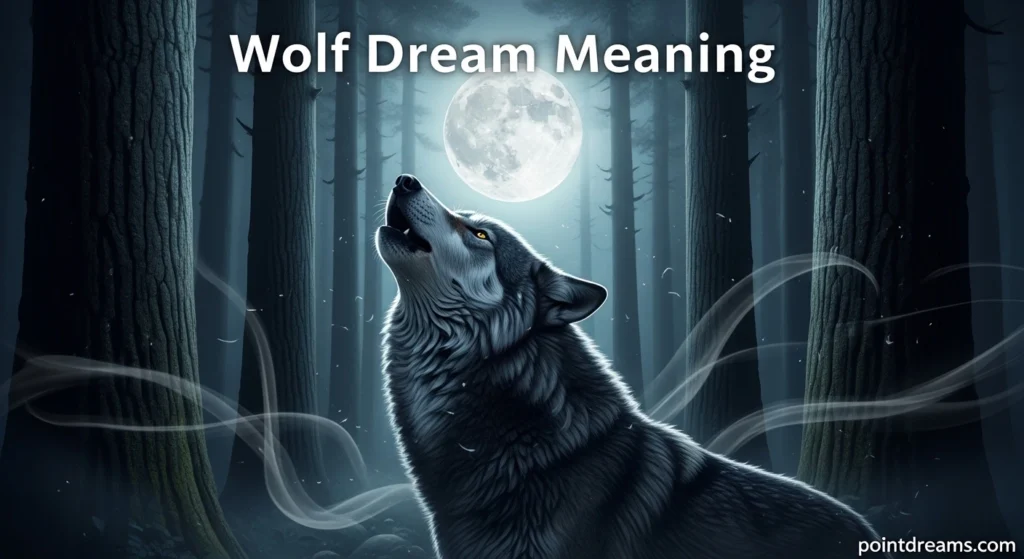
You are walking through a quiet landscape in a dream—fog settling low across the ground, sounds softened as if the world is holding its breath. Then you sense it before you see it: a presence watching you. A wolf emerges, not always aggressive, not always calm—just aware. Its eyes lock onto yours, and in that moment, something inside you shifts. Are you being threatened… or seen?
Dreams of wolves often leave a lasting emotional imprint because they carry a strange duality: fear and familiarity, danger and wisdom, instinct and reflection. Unlike chaotic dream symbols, the wolf feels intentional, almost intelligent. It does not simply appear—it observes.
These dreams frequently surface during emotionally complex periods of life, especially when guilt, trust issues, or intuitive confusion are present. You may be questioning someone’s intentions, your own decisions, or even your inner voice. The wolf becomes a mirror for these inner tensions, reflecting not just external relationships but the relationship you have with yourself.
Understanding wolf dreams is not about superstition. It is about decoding emotional intelligence—learning how your mind translates trust, fear, intuition, and guilt into symbolic encounters that feel both ancient and deeply personal.
The wolf as a mirror of instinct and emotional truth
The wolf is one of the most instinct-driven animals in symbolic dream language. It represents raw perception, emotional intelligence, and survival awareness. When a wolf appears in a dream, it often reflects your own instinctual mind trying to communicate something important.
Unlike domesticated animals, wolves are not fully controlled. This makes them perfect symbols for parts of yourself that resist suppression.
Instinctual awareness
The wolf represents the part of you that senses danger, truth, or emotional inconsistency before logic catches up.
Emotional honesty
Wolves do not hide their nature. In dreams, they often symbolize truths you may be avoiding or not fully acknowledging.
Internal guidance system
The wolf can act as an inner compass, especially when you feel lost or uncertain.
In this sense, the wolf is not external—it is reflective. It shows you what you already sense but may not fully trust.
Guilt and the wolf: when the mind reflects internal conflict
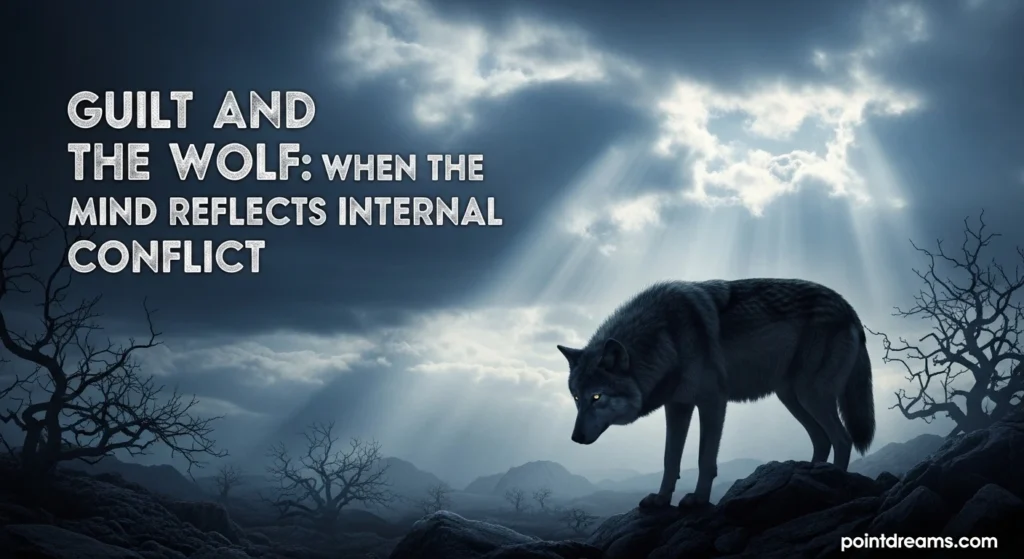
Guilt often appears in dreams not as punishment, but as presence. The wolf may appear when you are carrying unresolved guilt—about decisions, relationships, or emotional actions that still weigh on you.
The watching wolf
A wolf that observes silently may represent self-judgment. It is not attacking, but it is aware of what you are avoiding internally.
The chasing wolf
This often reflects guilt that has not been addressed. The more it is avoided, the more it “pursues” in symbolic form.
The pack effect
Multiple wolves may represent layered guilt—several unresolved emotional experiences interacting at once.
Guilt in wolf dreams is rarely about wrongdoing alone. It is about emotional alignment—whether your actions match your internal values.
Trust issues and the symbolic meaning of the wolf pack
Wolves are social animals, and in dreams, packs carry powerful meaning related to trust, belonging, and social dynamics.
When trust is unstable in waking life, the subconscious often uses wolves to express relational tension.
Feeling watched or evaluated
A pack of wolves may symbolize perceived judgment from others.
Fear of betrayal
The wolf pack can represent uncertainty about loyalty within relationships.
Desire for belonging
Not all wolf dreams are negative—sometimes they reflect a longing to find your place within a group.
The emotional tone of the dream determines its meaning. A calm pack suggests alignment; a hostile pack suggests emotional insecurity.
Intuition: the wolf as your inner knowing
One of the most powerful interpretations of wolf dreams is their connection to intuition. The wolf often appears when your inner voice is trying to guide you through uncertainty.
Silent knowing
A wolf that simply appears and watches may represent intuitive awareness—something you already know but have not fully accepted.
Directional guidance
If the wolf leads you somewhere, it may symbolize internal direction or life insight.
Conflicted intuition
If you fear the wolf but also feel drawn to it, this may reflect hesitation in trusting your instincts.
Intuition in wolf symbolism is not loud. It is steady, observant, and persistent.
Common wolf dream scenarios and their meanings
Scenario 1: Being chased by a wolf
Often reflects avoidance of emotional truth, guilt, or unresolved fear.
Scenario 2: Standing face-to-face with a wolf
Represents confrontation with instinct, truth, or suppressed emotion.
Scenario 3: A calm wolf watching you
Symbolizes awareness, intuition, or emotional observation.
Scenario 4: A friendly or protective wolf
Can indicate inner strength, resilience, or guidance during difficult times.
Scenario 5: A wounded wolf
May reflect emotional vulnerability or damaged trust.
Each scenario reflects not just external events but internal emotional states.
Wolves and the psychology of fear
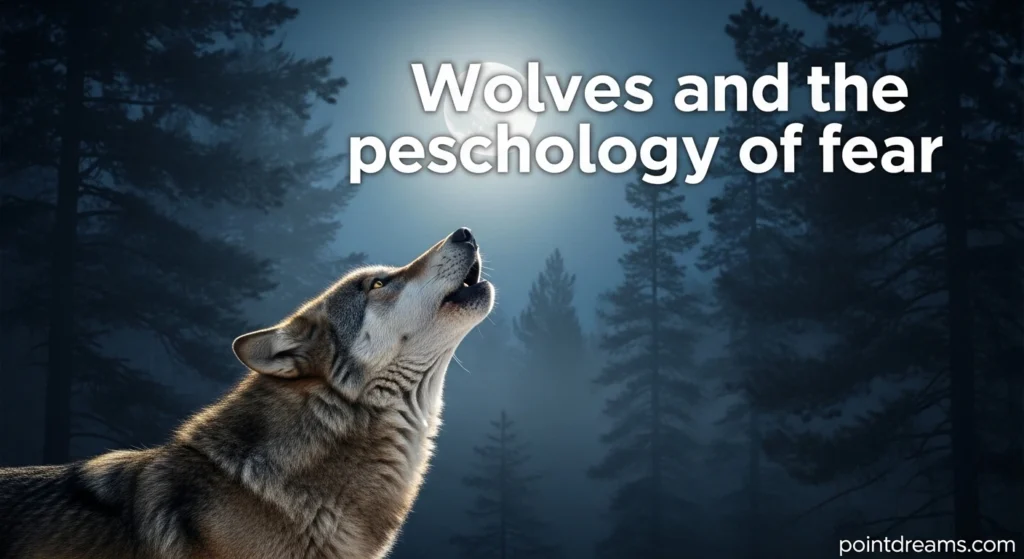
Fear is one of the strongest emotional triggers in wolf dreams. However, the wolf is rarely a symbol of external danger—it is more often a representation of internal emotional intensity.
Fear of truth
The wolf may represent truths you are not ready to face.
Fear of self-awareness
Sometimes what feels threatening is self-understanding itself.
Fear of emotional exposure
The wolf may symbolize vulnerability being brought into awareness.
The dream uses fear not to warn you, but to increase emotional clarity.
The wolf as a symbol of personal boundaries
Wolves are territorial animals, and in dreams, this often connects to emotional and psychological boundaries.
Boundary violations
A threatening wolf may reflect situations where your emotional boundaries are being crossed.
Weak boundaries
If the wolf enters your space easily, it may suggest difficulty asserting limits.
Strong boundaries
A calm, distant wolf can symbolize healthy emotional separation and clarity.
Boundary-related wolf dreams often appear during relationship stress or personal transformation.
Guilt, trust, and intuition interacting in the same dream
Wolf dreams often combine multiple emotional layers. Guilt, trust, and intuition are not separate—they interact dynamically.
Guilt distorts intuition
When guilt is strong, it can make intuitive signals feel threatening rather than helpful.
Trust shapes perception
If trust is broken in waking life, wolves may appear more aggressive in dreams.
Intuition seeks clarity
The wolf may persist in dreams until emotional truth is acknowledged.
The dream becomes a conversation between what you feel, what you fear, and what you know.
When wolves represent inner strength
Not all wolf dreams are about fear or guilt. In many cases, they represent personal strength, resilience, and independence.
The lone wolf
Often symbolizes self-reliance, emotional independence, or personal growth.
The guiding wolf
May represent internal wisdom during difficult transitions.
The protective wolf
Can symbolize boundaries, courage, or emotional defense mechanisms.
These interpretations become especially relevant during life changes or recovery from emotional hardship.
Wolf dreams during life transitions
Major life changes often trigger wolf symbolism because transitions create emotional uncertainty.
Ending relationships
Wolves may represent fear, trust issues, or emotional recalibration.
Career changes
The wolf may reflect instinctual uncertainty about direction.
Personal transformation
A wolf may appear when identity is shifting and intuition is being redefined.
Transitions activate instinct—and the wolf is instinct personified.
Misinterpretations of wolf dreams
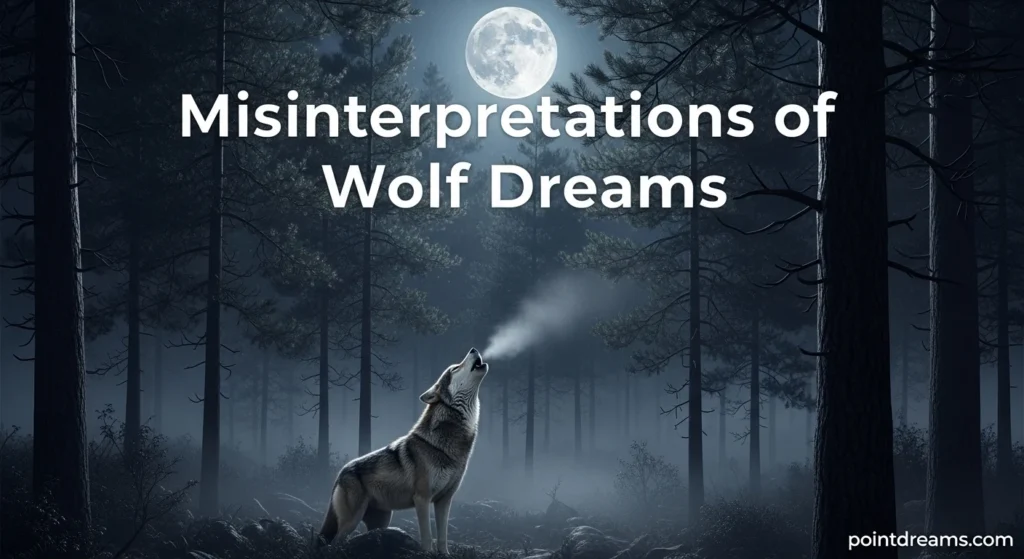
Wolf dreams are often misunderstood as purely negative or threatening. This oversimplification misses their emotional depth.
Mistake 1: Seeing wolves only as danger
They also represent wisdom, instinct, and protection.
Mistake 2: Ignoring emotional context
The same wolf can mean fear or guidance depending on your life situation.
Mistake 3: Overgeneralizing symbolism
Wolf dreams are highly personal and shaped by emotional state.
Understanding context is essential for accurate interpretation.
How to respond to wolf dreams constructively
Instead of fearing wolf dreams, they can be used for emotional reflection and personal insight.
1. Identify emotional tension
Ask what feels uncertain or conflicted in your life.
2. Reflect on trust issues
Consider whether relationships feel stable or uncertain.
3. Notice guilt patterns
Identify whether unresolved emotions are influencing your thoughts.
4. Strengthen intuition
Practice listening to subtle internal signals rather than ignoring them.
The goal is awareness, not control.
When wolf dreams become repetitive
Recurring wolf dreams often indicate ongoing emotional processing.
Unresolved guilt
Something still feels emotionally incomplete.
Ongoing trust issues
Relational uncertainty remains active.
Intuitive conflict
You may be resisting internal guidance.
Repetition signals that the emotional message has not yet been fully integrated.
The deeper message of the wolf dream
At its core, the wolf dream is not about fear—it is about awareness. It reflects the intersection of instinct, emotion, and truth. Whether it appears as a threat or guide depends on your relationship with yourself.
The wolf does not lie. It does not mask. It simply observes and reflects.
When you begin to understand the wolf as part of your internal landscape, the dream shifts from something frightening to something meaningful. It becomes a reminder that intuition is always present—even when guilt and uncertainty try to silence it.
Conclusion
Wolf dreams carry deep emotional significance because they reflect the complex relationship between guilt, trust, and intuition. They appear during moments when you are navigating internal conflict or emotional uncertainty. Rather than serving as warnings, they act as mirrors—showing you what your instinct already knows but your conscious mind may not yet accept.
Whether the wolf appears as a threat, observer, or guide, its presence signals emotional awareness in motion. It invites reflection on boundaries, relationships, decisions, and inner truth. Most importantly, it encourages reconnection with intuition—the quiet but persistent voice within that helps you navigate complexity.
By understanding wolf dreams in this way, you move from fear to insight, and from confusion to clarity, allowing emotional intelligence to guide your next steps.
FAQs
1. Do wolf dreams mean something bad will happen?
No. They reflect emotional states, instincts, and internal conflicts rather than future predictions.
2. Why do wolves appear during stressful times?
Stress heightens intuition and emotional awareness, which often triggers symbolic dream imagery.
3. What does it mean if the wolf is friendly?
It often represents inner strength, guidance, or emotional alignment.
4. Are wolf dreams connected to guilt?
Yes, they can reflect unresolved guilt or internal emotional conflict.
5. How can I understand my wolf dream better?
Look at your current emotional situation, especially trust issues, guilt, and intuitive decision-making.
