

It starts the same way every time. You’re in a familiar place—a home, an office, a street that feels almost real—but something is off. The air is heavy, charged with tension. Someone is standing in front of you, and the conversation is already underway, already heated. Words rise faster than you can control them. You try to explain, defend, or correct something, but it only escalates. Voices overlap. Emotions intensify. And just as the argument reaches its peak—you wake up.
Your heart is racing. Your thoughts are tangled. And the strangest part is that it wasn’t just a dream—it felt like a continuation of something unfinished.
Recurring argument dreams are surprisingly common, yet deeply personal. They often reflect unresolved guilt, lingering regret, or emotional conversations that never reached closure in waking life. But more than that, they reveal how the mind processes emotional tension that has not yet been fully understood or released.
Exploring these dreams matters because they are not just replaying conflict—they are replaying meaning. They show you where emotional weight still exists, and where healing is quietly asking for attention.
The Psychological Nature of Argument Dreams
At their core, argument dreams are emotional simulations. The brain is not simply replaying memories—it is reconstructing emotional experiences to process unresolved tension.
When we argue in real life, emotions often move faster than understanding. Things are said too quickly, reactions escalate, and clarity comes only afterward. Dreams recreate this dynamic, but without real-world consequences.
In this space, your subconscious attempts to re-examine emotional conflicts from multiple angles. It may replay an argument with a partner, family member, friend, or even a stranger, not to relive pain, but to reorganize emotional meaning.
Emotional processing in sleep
During sleep, the brain sorts through emotionally charged memories. Argument dreams often appear when something remains unresolved—especially feelings of guilt, regret, or self-criticism.
The absence of logic
In dreams, arguments may not follow real-world logic. This reflects how emotional memory is stored—not as structured narratives, but as emotional impressions.
Internal vs external conflict
Sometimes, the person you argue with represents an aspect of yourself rather than the actual individual.
Understanding this psychological foundation helps shift the interpretation from confusion to curiosity.
Read More: https://pointdreams.com/why-do-exes-appear-in-dreams/
Why Recurring Arguments Keep Returning in Dreams

A single argument dream may not seem significant. But when it repeats, it signals that something unresolved continues to occupy emotional space.
Recurring dreams often indicate emotional loops—patterns the mind revisits because they have not yet been fully processed or integrated.
The mind’s repetition mechanism
The subconscious does not “let go” of emotional tension until it is understood. Repetition is its way of revisiting unfinished material.
Emotional incompleteness
An argument may have ended in real life, but emotionally it may still feel open-ended. You might still wonder what you should have said or done differently.
Unprocessed guilt or regret
Recurring argument dreams frequently appear when self-blame or regret is present. The mind replays the situation in search of resolution or correction.
These dreams are not punishment. They are persistence—your mind trying to complete emotional processing that was interrupted in waking life.
Guilt as the Emotional Core of Argument Dreams
Guilt is one of the strongest emotional drivers behind recurring argument dreams. It often operates quietly, beneath awareness, shaping how the subconscious processes conflict.
Guilt in these dreams is not always about major wrongdoing. It can stem from small moments—words spoken too harshly, silence when action was needed, or perceived emotional neglect.
Types of guilt in dreams
1. Action-based guilt
Feeling responsible for something you said or did during a real argument.
2. Inaction-based guilt
Feeling you should have spoken up, intervened, or acted differently.
3. Emotional guilt
Feeling responsible for someone else’s feelings or reactions.
In dreams, these forms of guilt often become amplified. The argument may replay with heightened intensity, as if the mind is testing alternative outcomes.
Guilt in this context is not meant to punish—it is meant to highlight emotional responsibility that has not been fully processed or accepted.
Read More: https://pointdreams.com/white-owl-symbolism/
Regret and the “What If” Loop
Closely tied to guilt is regret—the emotional experience of wishing something had gone differently.
Argument dreams often trap the dreamer in “what if” scenarios. What if you had said something differently; stayed calm? What if the outcome had changed?
This mental loop is powerful because it keeps the emotional memory active.
Why regret persists in dreams
The mind uses imagination to explore unresolved outcomes. Dreams become a space where alternative versions of the past are tested.
The illusion of correction
In some dreams, you may try to fix the argument, only for it to escalate again. This reflects how regret does not resolve through imagination alone.
Emotional attachment to outcomes
Regret persists because emotional energy is still attached to the event. The mind keeps returning to it in an attempt to “complete” it.
Recognizing this loop is essential. It shows that healing is not about changing the past, but changing your relationship to it.
Internal Conflict: When the Argument Is With Yourself

Not all argument dreams involve other people. Sometimes the conflict is internal, even if it appears external.
You may argue with a partner in the dream, but the emotional tone reflects self-judgment. The other person becomes a projection of your inner critic.
Signs of internal conflict in dreams
- Repetitive self-defense
- Feeling misunderstood no matter what you say
- Emotional escalation without resolution
The inner critic dynamic
In many cases, the “other person” represents the part of you that is dissatisfied with your actions or decisions.
Self-compassion imbalance
These dreams often appear when self-criticism outweighs self-understanding.
When interpreted this way, argument dreams become less about relationships and more about internal emotional balance.
Unresolved Conversations and Emotional Incompletion
Some argument dreams are simply unfinished emotional conversations. In waking life, not every conflict gets proper closure. Things are left unsaid, or conversations end abruptly.
The subconscious revisits these moments to simulate completion.
Examples of emotional incompletion
- Walking away mid-argument
- Not expressing true feelings
- Ending communication without resolution
Dream reconstruction
In dreams, the mind attempts to reconstruct the conversation—but emotional intensity often distorts it.
The need for expression
These dreams highlight the importance of emotional expression, even if only internally through reflection or journaling.
The goal is not always to reopen real-world communication, but to complete emotional expression within yourself.
Common Dream Scenarios and Their Meaning
Repeating the same argument
This often reflects unresolved emotional loops or persistent guilt.
Arguing but unable to speak
This may symbolize feeling unheard or emotionally suppressed in waking life.
Winning the argument
This can indicate a desire for validation or internal reassurance.
Losing the argument
This may reflect self-doubt or lingering regret.
Each variation provides clues about emotional processing, not literal outcomes.
How Stress and Daily Pressure Influence These Dreams
Daily stress plays a major role in recurring argument dreams. When emotional load increases, the mind is more likely to process unresolved material during sleep.
Stress does not have to be extreme to influence dreams. Even subtle pressure—work demands, relationship tension, or internal expectations—can trigger emotional replay.
Emotional overflow
When the mind cannot fully process emotions during the day, it shifts processing to dreams.
Cognitive overload
Too many unresolved thoughts can create fragmented dream narratives, often expressed as arguments.
Emotional residue
Small emotional experiences accumulate over time and surface in symbolic forms.
These dreams are often less about a single event and more about cumulative emotional strain.
The Role of Memory and Emotional Encoding
Memory plays a key role in recurring argument dreams. Emotional memories are stored differently from factual memories—they are stored with feeling attached.
This means that even if you forget details of an argument, the emotional imprint remains.
Emotional memory triggers
- Similar situations in current life
- Similar tones of voice or behavior
- Internal emotional states like stress or insecurity
Why the brain revisits arguments
It is not trying to punish you—it is trying to reprocess emotional intensity in a safe environment.
Memory as emotional recycling
Dreams allow the brain to revisit emotional experiences until they lose intensity and become integrated.
This process is essential for emotional healing.
Healing Through Dream Awareness
Recurring argument dreams can actually serve as tools for emotional healing when understood properly.
Instead of fearing them, you can use them as signals of unresolved emotional material.
Reflection practices
- What emotion stood out most in the dream?
- Is this emotion present in my waking life?
- What part of me feels unresolved or unheard?
Emotional integration
Healing begins when emotional experiences are acknowledged rather than avoided.
Reframing the dream
Instead of seeing the dream as conflict repetition, view it as emotional processing in progress.
Over time, awareness reduces intensity.
Breaking the Cycle of Recurring Dreams
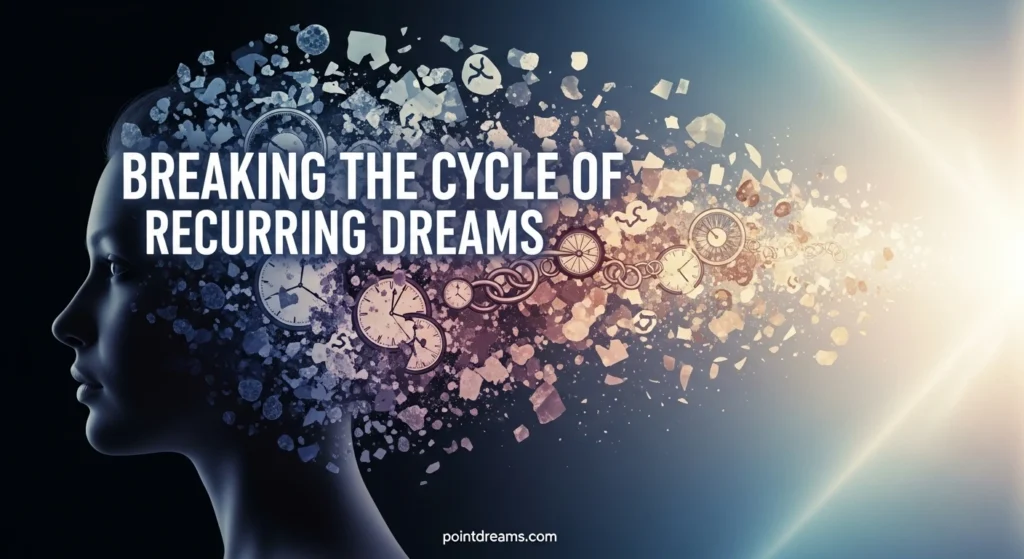
Recurring argument dreams often continue until emotional resolution is achieved internally.
This does not necessarily mean resolving the external situation—it means resolving your emotional response to it.
Practical steps
1. Emotional acknowledgment
Name what you feel without judgment.
2. Journaling the argument
Write out the conversation as it appears in your dreams.
3. Rewriting the outcome
Explore alternative emotional endings—not to change the past, but to understand it differently.
4. Self-compassion practice
Replace self-blame with understanding.
These steps help reduce emotional repetition over time.
When Argument Dreams Reflect Growth
Not all recurring argument dreams are negative. Sometimes they appear during periods of emotional growth.
As you evolve, your mind re-examines past emotional experiences through a new lens. What once felt painful may now feel understandable.
Signs of emotional progress
- Reduced emotional intensity over time
- Shift from anger to reflection
- Increased clarity in dream meaning
These changes indicate that emotional processing is moving forward.
Turning Emotional Conflict Into Insight
Argument dreams ultimately serve a deeper purpose: turning emotional conflict into insight.
They reveal where guilt, regret, or unresolved emotion still exists. But more importantly, they show that your mind is actively working toward emotional balance.
From conflict to understanding
The goal is not to eliminate these dreams but to understand what they are revealing.
Emotional awareness as healing
The more aware you become of your internal emotional patterns, the less power recurring dreams have over you.
Conclusion
Recurring argument dreams are not random repetitions of past conflict—they are emotional processing events shaped by guilt, regret, and unresolved emotional experiences. These dreams often reflect unfinished conversations, internal criticism, and the mind’s attempt to find closure where none was fully achieved in waking life.
Rather than viewing them as distressing cycles, they can be understood as meaningful signals from your subconscious. They highlight emotional areas that still require attention, understanding, and compassion. As you reflect on these dreams, you begin to recognize that healing is not about changing the past but about transforming how the past lives within you.
Over time, awareness reduces emotional intensity. The arguments soften, the repetition fades, and clarity emerges. What once felt like conflict becomes insight, guiding you toward greater emotional understanding and inner peace.
FAQs
1. Why do I keep having the same argument dream?
It usually indicates unresolved emotional processing or lingering guilt and regret.
2. Does this mean I need to fix things with the person in my dream?
Not necessarily. Often the dream is about internal emotional processing, not external action.
3. Why do arguments feel so real in dreams?
Because emotional memories are activated during sleep, making experiences feel vivid.
4. Can stress cause these dreams?
Yes, daily stress and emotional overload often trigger recurring argument dreams.
5. How can I stop these dreams?
Processing emotions consciously, journaling, and practicing self-compassion can reduce recurrence over time.
